Category Archives: poultry

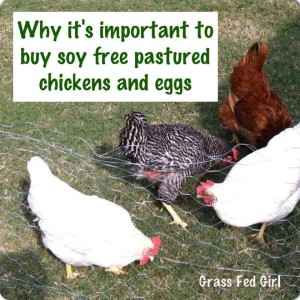
Why Buy Soy Free Pastured Eggs?

Much of the soy grown today is used for chicken feed for factory farming operations. Chickens who are raised on pasture are healthier and have a better nutritional profile than poultry raised in large scale, overcrowded CAFO’s. We are only as healthy as the animals that we consume so it important to think about the food chain and how it affects our constitution. The following reasons are why it is important to seek out soy free pastured chickens and their eggs whenever possible.

Reasons to seek out pastured and soy free whenever possible:
  • The U.S. Department of Agriculture did a study in 1993 where hens were taken off pasture and fed a diet of soy, corn, wheat or cottonseed meal. When the chickens were not fed their natural diet they didn’t lay as many eggs and the few chicks that developed from the eggs had higher rates of death and illness.
  • Soy is one of the most common food allergens and many people who think they are sensitive to eggs are just allergic to the soy that concentrates in the yolks.
  • Chickens are omnivores and are actually descendents of Velociraptor, a small meat eating dinosaur. Chickens are designed to eat mice, snakes, bugs, worms, and insects. It is not natural for their diet to be 95% “vegetarian” corn and soy.
  • Chickens that eat corn and soy will have an imbalanced omega 3/6 ratio, making these poultry products inflammatory foods for humans.  A pastured chicken that is free to roam on grass and eat bugs will have a 3/1 ratio of omega 6/3 which means eating these chickens and their eggs will be restorative for health. The average American is very inflamed with a 20/1 ratio of omega 6/3, which is a good indicator of future health risk for heart disease, cancer and diabetes.
  • Commercial chicken feed often uses recycled vegetable oil from restaurant fryers as a filler. Some experts believe that eating factory farmed chicken has similar effects on the body as drinking soybean oil.
  • Research indicates that soy isoflavones are transferred into the yolks of chickens which are fed a diet concentrated with soy feed. When humans eat soy fed chickens these estrogen mimicking hormones can accumulate causing various health problems.
  • Soy contains isoflavones that accelerate growth in chickens by depressing thyroid function creating unnatural weight gain which increases market value of fowl.
  • When chickens are fed soy, high concentrations of estrogen mimicking hormones end up in the yolks causing disruption in human fertility, upsetting the delicate hormonal balance in men and women.
  • Most soy in the USA is genetically modified which causes abnormalities in hampster studies after several generations. GMO’s have not been adequately tested on humans and eating soy filled eggs could cause unintended changes in future human DNA.
  • Children are especially sensitive to hormones from soy contaminated chicken and can have irregularities in sexual development.
  • Pastured chicken that are eating worms and insects have more omega-3 fatty acids, vitamin E, vitamin A, folate and vitamin B-12 than caged, stressed, and overcrowded chickens. Pastured eggs are higher in the anti-oxidants lutein and zeaxanthin which helps in prevention of macular degeneration and colon cancer.
  • Eggs from pastured hens have vitamin D levels 3-6 times higher than the eggs from hens raised in confinement. Pastured hens are exposed to direct sunlight, which their bodies convert to vitamin D. When chickens have enough vitamin D they have higher egg production. A high soy diet can even deplete stored of vitamin D in chickens and humans.
  • Uncluttered free roaming Pastured chickens are very sustainable and create their own nitrogen rich fertilizer which helps grow more grass and other vegetables.
  • Rainforests are being clear cut in South America for the production of soybeans to feed chickens in high volume over-crowded operations.

    Conditions at some large scale CAFO operations

Critical criteria for picking quality chickens and eggs:
  • Visit the farm if possible
  • Get to know the farmer and ask lots of questions
  • Make sure chickens have free access to sunshine
  • Chickens have ability to forage for bugs in the dirt
  • Rotated to new grass periodically
  • Supplemented diet with leftover kitchen scraps
  • Fed grasses like nettles and other greens
  • Humanely treated without beak or toe clipping
  • “Certified Humane” label is helpful
  • Organic is important but not a sole criteria
  • “Animal Welfare Approved” is a good label
  • “No Antibiotics” label is important and regulated

    Sometime organic is not enough

Fluffy Qualifications:

  • “Cage free” and “free range” are mainly just buzz words and not regulated
  • Flax feed used to create”high omega-3″ is not necessary since the EPA and DHA cannot adequately be converted by humans
  • Vegetarian Fed (chickens are not vegetarians)
  • Organic means they are fed organic corn and soy which is not ideal
  • Organic chickens can still be overcrowded and have in-humane conditions
  • Pictures of barns and farms on cartons are just marketing propaganda
  • No hormones is not helpful since hormones are not allowed to be used on chickens by the USDA
  • No antibiotics is a helpful label and is regulated by USDA
  • USDA Organic can be used if a product is only 95% organic
  • “Pesticide free” really has no regulation
  • “Natural” also has no meaning/regulation
Where to Buy Soy Free Eggs:
A great place to get soy free chickens in the Bay Area is Backyard CSA. Tell them Grass Fed Girl sent you.
You can also get soy free pastured eggs mailed to your home here.
Visit Eatwild.com to find a responsible farmer in your area
A great chicken/egg buying guide is available here.

Sources:

Balanced Bites podcast with Karen Pendergrass

http://www.ncbi.nlm.nih.gov/pubmed/11758913

http://www.westonaprice.org/childrens-health/eat-eggs-and-have-chicken-too

Ask the Low Carb Experts with Dr. Kayla Daniel

www.marksdailyapple.com/a-beginners-guide-to-backyard-chickens

http://www.eatwild.com/animals.html

http://raypeat.com/articles/articles/unsaturated-oils.shtml

http://www.guardian.co.uk/environment/2010/nov/11/chefs-soy-sustainable-farming-rainforest

http://www.nal.usda.gov/afsic/pubs/ofp/ofp.shtml

http://www.huffingtonpost.com/jeffrey-smith/genetically-modified-soy_b_544575.html

Don’t Be Soy Sorry:

If you want to read more about how soy affects us, read this great book:


Caitlin Weeks

Caitlin Weeks

Caitlin Weeks, BA, Certified Nutrition Consultant, C.H.E.K. Holistic Lifestyle Coach, and NASM Certified Personal Trainer is a San Francisco based Holistic Nutritionist serving clients locally and beyond (US & international) via phone and Skype consultations. Since 2001 Caitlin has had success conquering obesity after a lifelong struggle with her weight. Since 2009 she has been winning the battle over Hashimoto’s Thyroiditis by managing stress and using a paleo diet. She is committed to educating others about the benefits of traditional foods and efficient exercise. She writes weekly articles about health and nutrition on her blog: www.grassfedgirl.com

More Posts - Website

Follow Me:
TwitterFacebook

8 Reasons to Eat More Liver and Duck Pate Recipe

Organ meats have been prized for millions of years by native cultures because they are rich in vitamins and minerals. These tribes also knew the importance offal for fertility and childbearing. I did not grow up eating liver or organ meats but I am trying to have them on a more regular basis as part of a nutrient rich diet. Liver is very affordable when compared with fancy muscle meats so if you are creative you can have more of this super food which will energize and reinvigorate you.
1.Vitamin A: Just 3.5 oz of liver provides nearly 200% of the daily value of Vitamin A, which is important for healthy skin as well as proper thyroid and immune function. It is vital for growth, development and healthy eyesight. It is important to get animal food sources of vitamin A because the most people cannot convert Beta-carotene to usable vitamin A. It is also important to note that fat is required for the body to synthesize Vitamin A.
2.  Liver supplies DHA important for brain and nervous system health.
3. Riboflavin: Just under 1/2 cup of liver provides 100% of the daily value of Riboflavin (B-2), which is important for high energy production and healthy mucous membranes.
4. Folate- 3.5 oz of liver has nearly 147% of folate, which is important for a healthy pregnancy, proper fetal development and proper reproductive function. Folate is also crucial in preventing anemia, gingivitis, digestive system disorders. 
5. B-12 (cobalamin) 3.5 oz provides 200% of this anemia-preventing vitamin that is synergistic  with folate. It also helps prevent Alzheimer’s type symptoms common in the elderly. This vitamin is only found in animal foods. 
6. B-3 (Niacin) Liver is rich in Niacin which is made from tryptophan and important for preventing dementia, dermatitis, and has been shown to be helpful for arthritis. Niacin also keeps the mucosal lining of the intestinal tract healthy preventing diarrhea.
7. B-5 (Pantothenic Acid) is vital for processing fats and carbohydrates as well as lowering triglycerides. It is important for proper adrenal function and is considered an anti-stress vitamin. About a 1/2 cup of liver gives 71% of the RDA of B-5.
8. Minerals: Liver is also rich in vital minerals such as Selenium which is a powerful antioxidant. Rich in Iron, liver is important for proper lung function and is commonly deficient among Americans. Copper, which is important for healthy blood, strong bones, and wound healing. Phosphorus supports healthy teeth/ bones and increases calcium absorption. Commonly low in the elderly, Zinc is crucial for a good sense of smell and male sexual health.
Don’t Like Liver ? Liver is nature’s multi-vitamin so If you do not like liver there are many ways to get it in. You can chop it up into ground beef, put it into a stew/soup or dice into spaghetti sauce. You can also freeze it for a month then slice it into slivers and swallow like a pill. Read more about the benefits of liver from Chris Kresser here. Always use pastured and organic poultry or grass fed beef liver.Where to buy good liver?
Us Wellness Meats has some wonderful veal liver and bison liver. You can check Eat Wild to find a local farm near you. One of my favorite places to buy liver in San Francisco are The Fatted Calf on Gough and Fell in Hayes Valley. Also Marin Sun Farms has local grass fed beef liver and pastured chicken liver. Both of these butchers have stalls at the Ferry Building on Saturday mornings. 

Ingredients:
1/4 cup and 1Tbsp grass fed butter
1 lb organic and pastured duck liver
2 shallots sliced
4 cloves sliced garlic
2 tsp thyme
1 tsp crushed bay leaves
1 Tbsp dried rosemary
2 tsp dry mustard powder
2 Tbsp organic raw apple cider vinegar
Sea salt to taste 
Fresh ground pepper to taste
Fresh parsley for garnish
Fresh raw veggies for dipping

Directions:
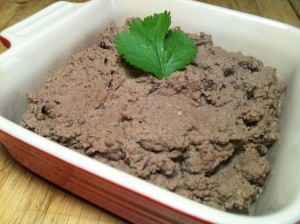
Saute the shallots, garlic, salt and pepper in one tbsp of fat for 3- 5 minutes on medium. Then add the duck liver (make sure to drain off any liquid). Saute 5- 7 more minutes, then add herbs/spices and vinegar. Let the vinegar cook off. Add to the food processor. Immediately add the fat slowly in chunks. You need the heat from the livers to melt the fat. Pulse the food processor several times until the desired consistency is reached.  Add to glass storage container and chill for two hours. Sometimes I eat this warm because I can’t wait. It is up to you. If you can not eat dairy just substitute the butter for pastured poultry fat or bacon fat. I serve it with endive leaves, carrots, red pepper slices, or cucumber rounds. Top pate with parsley or chives and serve. For a great chicken liver recipe check Balanced Bites here.


Sources: 
1. Gedgaudas, N. (2011). Primal body, primal mind. Rochester: Healing Arts Press.
2. Murray, Micheal. Dr. (2005). Healing Foods. New York: Atria Books.
3. nutritiondata.self.com


Caitlin Weeks

Caitlin Weeks

Caitlin Weeks, BA, Certified Nutrition Consultant, C.H.E.K. Holistic Lifestyle Coach, and NASM Certified Personal Trainer is a San Francisco based Holistic Nutritionist serving clients locally and beyond (US & international) via phone and Skype consultations. Since 2001 Caitlin has had success conquering obesity after a lifelong struggle with her weight. Since 2009 she has been winning the battle over Hashimoto’s Thyroiditis by managing stress and using a paleo diet. She is committed to educating others about the benefits of traditional foods and efficient exercise. She writes weekly articles about health and nutrition on her blog: www.grassfedgirl.com

More Posts - Website

Follow Me:
TwitterFacebook