In a world where dietary advice often seems contradictory, Dr. Lisa Wiedeman, an experienced Optometric Physician, stands out with her steadfast commitment to the carnivore diet. At nearly 59 years old and with a remarkable 15 years on the carnivore diet, Dr. Wiedeman has transformed her health and the lives of countless others. In this exclusive interview, she answers key questions about the safety, benefits, and challenges of the carnivore diet, providing valuable tips to help you stay on track, even through the holiday season.
Dr. Wiedeman shares invaluable advice on navigating the holidays with a carnivore diet, the importance of mindful eating, and overcoming food addiction. She introduces the concept of sobriety and sober circles, emphasizing the need for support in maintaining a healthy lifestyle. This interview is packed with practical tips and highlights the significance of a carnivore diet and the incredible impact it can have on one’s overall well being.
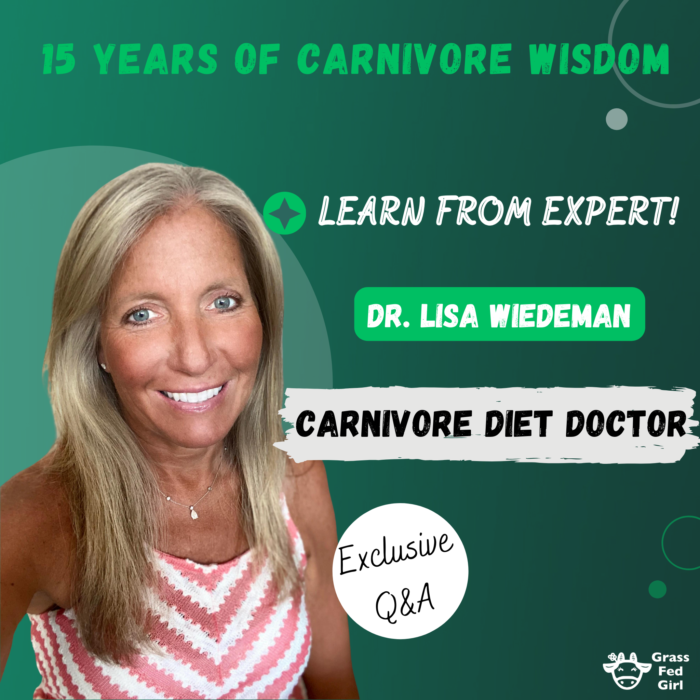
To gain deeper insights into the benefits of the carnivore diet and hear directly from the expert, you can watch her video interview about the wisdom from 15 year carnivore diet doctor Dr. Lisa Wiedeman below. Don’t forget, the full interview is also available below for further reading!”
Wisdom from 15 Year Carnivore Diet Doctor Dr. Lisa Wiedeman
In the world of dietary lifestyles, few can claim the depth of experience and insight as Dr. Lisa Wiedeman. With a remarkable 15 years on the carnivore diet, Dr. Wiedeman has transformed her health and the lives of countless others. In this exclusive interview, we delve into the wisdom from 15 year carnivore diet doctor Dr. Lisa Wiedeman, exploring her journey, the challenges she overcame, and the profound health benefits she discovered along the way.
Dr. Wiedeman shares invaluable advice on navigating the holidays with a carnivore diet, the importance of mindful eating, and overcoming food addiction. She introduces the concept of sobriety and sober circles, emphasizing the need for support in maintaining a healthy lifestyle. This interview is packed with practical tips and inspiring stories that highlight the significance of a carnivore diet and the incredible impact it can have on one’s overall well-being.
In Conversation with Dr. Lisa Wiedeman: Insights from a 15-Year Carnivore Diet Veteran
Caitlin Weeks: I am so excited to welcome Dr. Lisa Wiedeman here. She is an eye doctor and has been following the carnivore diet for almost 15 years. She has so much wisdom to share with us. Welcome, Dr. Lisa!
Dr. Lisa Wiedeman: Thank you, Caitlin, so much for having me here. I am incredibly passionate about spreading the word about health and helping people understand how we’ve been misled by mass media and dietary guidelines for decades. Most of us have consumed unhealthy food for much of our lives. It’s exciting to see the rise of the Keto and carnivore movements. With almost 15 years of experience on the carnivore diet and my medical background, I feel I have a bit of credibility. This isn’t something I decided on a whim; I carefully considered the potential risks and benefits. It’s great to share this knowledge and assist others in any way I can.
Question 1: How did you discover the carnivore diet, especially given the common belief in the importance of grains, fruits, and vegetables?
Dr. Lisa Wiedeman: For those who don’t know my background, I struggled with a 30-year history of sugary and processed food addiction, binge eating, and eating disorders. I was desperate to find a way to have a normal relationship with food. This was before Facebook and Instagram, so I spent a lot of time searching the internet. I initially tried the Paleo diet after reading books like “Neanderthin” by Ray Audette and “The Schwarzbein Principle,” and later explored Atkins. These diets emphasized no flour and no sugar, and I realized there was something to it. However, even with Paleo, which allowed fruits and vegetables, I struggled. Eating fruit would trigger my cravings, leading me down a path of over consuming and binging.
Then, on March 9, 2009, I stumbled upon a website called Zeroing In On Health, a carnivore diet forum. This group, which had been kicked off a low carb website, advocated for eating only meat and drinking water. Reading through personal journals, I found stories of people, especially two women, who had completely recovered from their eating disorders through this diet. I decided to give it a try, even though it seemed extreme. Cutting out all carbs and sugars, including fruits and vegetables, felt counterintuitive, but I was desperate for a solution.
As I began the carnivore diet, I noticed my cravings subsiding and my health improving week by week. The more I researched, the more convinced I became. Historical accounts like Vilhjalmur Stefansson’s “Fat of the Land” and studies on primitive societies that thrived on meat-based diets reinforced my decision. Despite initial skepticism from others, I persisted, and my health transformations spoke for themselves.
Around four years ago, Dr. Shawn Baker’s appearance on Joe Rogan’s podcast and the influence of Jordan and Mikhaila Peterson brought more attention to the carnivore diet. Inspired, I created my Instagram account, Carnivore Doctor, to share my experiences and counter misconceptions about the diet’s long term sustainability. As an Optometric Physician, I’ve even seen improvements in my patients’ eye health by advising them to eliminate processed foods, flour, sugar, and seed oils.
For the past decade, and more intensively in the last three to four years, I’ve been coaching others on this lifestyle. It’s incredibly rewarding to help people transform their lives through a diet that has given me so much health and vitality.
Caitlin Weeks: Oh yeah, I remember when Joe and Charlene Anderson were active in the community. I started my blog around 2010 and was initially focused on Paleo. When I realized I couldn’t handle carbs, I shifted more towards Keto. I thought the Andersons were a bit extreme back then. Joe and Charlene have been on the carnivore diet for about 20 years now. They were known for their strict adherence to eating only ribeye and drinking water. I used to think they were nuts!
Dr. Lisa Wiedeman: Right, Joe and Charlene Anderson were pioneers in the carnivore movement. Charlene had a severe case of Lyme disease, which led them to this way of eating. Joe did extensive research and found that a carnivore diet could help with various autoimmune issues. They’ve likely been on the diet for about 30 to 35 years now. At the time, they ate only ribeye and drank water for every meal, and Charlene experienced remarkable healing. Joe supported her by joining in the diet.
Unfortunately, they faced severe backlash. They had two sons whom they also fed a carnivore diet, and some people reported them to authorities, accusing them of child abuse. This led to investigations by child protective services. Due to this, they went under the radar for a while to protect their family from further scrutiny.
Caitlin Weeks: Oh no, that’s terrible. I mean, I don’t like to talk much about my kid for that reason. He’s not on a carnivore diet because he’s so healthy; I don’t think it’s necessary. He doesn’t have any allergies or health issues, so I feed him more of a Paleo or Weston A. Price approach. I feel like that’s enough for a healthy kid. If he had specific issues, maybe I’d consider it, but he’s really healthy and strong. People often assume you’re feeding your kid a carnivore diet if you mention it. I don’t think there’s anything wrong with it, but it feels unnecessary and too difficult for me.
Dr. Lisa Wiedeman: Yeah, the important thing is that you’re not feeding them seed oils, french fries at restaurants, or potato chips. The key is to avoid processed foods and ensure they’re eating nutritious, whole foods.
Caitlin Weeks: That’s something I’m really strict about—seed oils. I don’t want him eating Chick-fil-A or any of that crap. I mean, I’ll give him a McDonald’s hamburger without the bun, no problem, but I’m not giving him the fries or the nuggets or any of that. Exactly, yeah, hell no, like no way.
Dr. Lisa Wiedeman: And that’s hard enough as it is. The next thing you know, they’re at a party and there’s a bowl full of Goldfish crackers, which, guess what, have seed oils in them. It’s difficult, aside from trying to avoid flour and sugar, because those aren’t healthy for anyone. But even more so, just avoiding seed oils is a challenge. You have to be vigilant because they’re in so many things.
Caitlin Weeks: After a certain age, you’re going to lose some control if you let kids go to birthday parties or things like that. I’m still in control of what my son eats right now, but at some point, like my sister’s kids, you can’t control every bite they eat. I try to instill in him a desire for real food. Even if he has a snack or something, he still wants hot food, like a hamburger or scrambled eggs. Sometimes he eats scrambled eggs twice a day. I want him to recognize what real food is and to prefer it over other options.
Dr. Lisa Wiedeman: Yeah, and you have to remember that he’s growing up in your environment, which has a huge impact. Just having discussions about it can make a difference. For instance, you might say, “There will be cupcakes at this party, but remember what’s better for you.” Kelly Hogan’s kids, for example, are pretty good about not eating junk at parties. It’s crazy how much revolves around food—every party, every social situation, even sports events. There’s junk food everywhere, and it’s a constant challenge.
Question 2: Holidays often bring a lot of food related temptations. How do we keep from gaining weight and losing control, especially when faced with holidays, events or social gatherings? It seems like what’s supposed to be one day of eating a lot turns into a six-week free-for-all pig-out buffet.
Dr. Lisa Wiedeman: Yeah, and you know, for me, it involved understanding that this really is an addiction, and a severe one at that. Unlike other addictions, like alcohol or drugs, where people generally respect your sobriety, food addiction is different. No one pressures a recovered alcoholic to just try a vintage wine because it’s so good, or a drug addict to join them in using drugs. But with food, especially during the holidays, people don’t realize that some of us are trying to abstain from it because it’s everywhere and socially accepted.
For example, you’re at a party and someone insists you try their special dessert, or you walk into the break room at work and it’s filled with junk food and homemade treats. Even shopping for a hammer at Home Depot, you’re confronted with candy at the checkout. These constant triggers can make it extremely difficult to maintain control, especially when you have a history of using food to fill emotional voids like boredom, loneliness, or even happiness.
I’ve learned to view my relationship with certain foods as an addiction. I can’t just have one piece of candy or one treat without it leading to more. For many of us, once we start, it’s hard to stop. Allowing yourself a small treat can quickly spiral into more indulgence, especially with the abundance of holiday foods starting from Halloween through the New Year.
The key is abstinence and recognizing that certain foods trigger addictive behaviors. I don’t keep anything in my house that I don’t have sober behavior around. This means no treats that call my name from the pantry. For example, even foods considered healthy, like nuts, can be a trigger for me. If I start with three macadamias, I end up wanting three handfuls and then the whole bag. So, I avoid these triggers entirely to maintain control.
Question 3: Nuts seem to have more carbs than people realize, and they’re hard to digest. I’ve had some of my worst stomach aches with pistachios and cashews. What is your experience and take on this?
Dr. Lisa Wiedeman: They’re really not healthy food, and I know that sounds controversial, but it’s true. People might think I’m being extreme, but when you look at the facts, nuts like almonds are very high in oxalates. You can examine each type of nut and see the omega-6 levels, which in some cases are close to those in canola oil. I did a whole video with Dr. Chris Kenobi, whose Ancestral Health Foundation focuses on the dangers of seed oils. He has detailed information about the linoleic acid levels in nuts, which I included in my video with him.
The main point is that for me, sobriety means abstinence. If I allow myself to indulge, even a little, it starts a chain reaction. It often begins around Halloween, then continues into Thanksgiving and the whole Christmas season, which now seems to start as early as Labor Day. There are so many food-related social traditions, from work parties to holiday gatherings. If I allow myself even a small treat, I tend to lose control and keep going back for more.
I realize I cannot moderate foods that are not in what I call my “sober circles.” I’ve made a video explaining my green, yellow, and red sober circles. In the green circle are foods like meat, seafood, eggs, and water—things I never binge on. For instance, I don’t binge on ground beef, steak, or scallops. Eggs are fine unless there’s a lot of cheese mixed in, which I can binge on. This brings us to dairy and cheese. For many people, including myself, dairy is inflammatory and addictive due to the casein morphine it contains.
I can’t have cheese in my house because I don’t have sober behavior around it. I might have it on a burger at a restaurant or at an event with portion control, but not at home. During the holidays, many people make excuses to return to their “drug of choice,” even if they’ve been following a keto or carnivore diet. This excuse making leads to a slippery slope, and by January 1, they find themselves inflamed and several pounds heavier.
Question 4: Yeah, sometimes it’s like I convince myself that it’s already too late, and then I think I’ll just wait till January 1 to get back on track. What strategies do you recommend to avoid falling into this mindset?
I share some tips to have a more minimalist carnivore holiday season and a holiday gift guide in this post for my readers.
Dr. Lisa Wiedeman: That’s the free ticket or free pass in your addiction. I call it the “ditch demon” that convinces you to keep going off track. It’s like, “We’ve already messed up a little, so let’s just keep going.” This mindset is driven by the need for a dopamine hit, and it’s very insidious. Three years ago, I started hosting carb sober holidays to address this. The first year, I called it the “excuse trifecta” because of Halloween, Thanksgiving, and Christmas. It’s always easy to make an excuse to eat something unhealthy.
One strategy is to plan ahead and think about what you will eat. I use what I call “sober circles” – green, yellow, and red zones. Green is safe foods like meat, seafood, eggs, and water. Yellow is the warning zone, like cheese, which I only allow in certain situations. Red is for foods that are off limits because they trigger unhealthy behaviors. For example, pork rinds might be fine for some people in moderation, but if you can’t stop eating them, they need to be in the red zone.
If your goal is to get off medication, resolve health issues, and achieve a natural body weight, you have to be very mindful of what you eat. Everything you put in your mouth should either lead to health or harm. For example, I love fresh mozzarella, but I can’t control myself around it, so I don’t keep it in the house. Simplicity is key – I focus on nutrient-dense foods and avoid those that aren’t beneficial for me.
People often ask why I don’t eat salads. I could, but they lack nutrient density and often go to waste. I used to eat a lot of salads with lean chicken breast, trying to lose weight, but now I’m happier eating ribeye and other meats. It’s not boring to eat this way – boring is waiting in line at the pharmacy or doctor’s office. At almost 59, I feel great, and I’m so glad I found this way of eating when I did. I wish I had found it earlier, but now I look forward with optimism because of the freedom and health it provides.
Question 5: How do you perceive the challenge of convincing people to eliminate vegetables like broccoli or cauliflower from their diet, and what grassroots efforts are being made to promote this idea?
Dr. Lisa Wiedeman: Yeah, people don’t realize that eliminating something like broccoli or cauliflower is the last thing on their mind. They think those vegetables are healthy and full of vitamins, minerals, and nutrients. But in reality, they don’t have much bioavailable nutrient value. It’s hard to convince people of this, but it’s becoming more evident through grassroots efforts. We’re trying to put out videos and get more people exposed to the idea that if you want optimal health, you shouldn’t be putting that stuff in your body. I feel badly for people stuck in the vegetarian or vegan route because it becomes a cult-like identity, making it hard for them to stop. It’s wonderful, though, to see many vegetarians who have turned to carnivore due to the efforts of former vegetarians sharing their stories.
Question 6: What’s your perspective on the idea that transitioning to a vegetarian diet can improve health, especially for individuals coming from a standard American diet filled with processed foods?
Dr. Lisa: Transitioning to a vegetarian diet might offer initial health benefits, particularly for those moving away from heavily processed foods. However, in the long run, vegetarian diets can become nutrient-deficient, posing challenges for sustained health. While some individuals may experience short-term improvements, it’s essential to address potential deficiencies and explore alternative dietary approaches for long-term health and well-being.
Question 7: What do you think about the importance of being mindful of every bite we put in our mouths and the broader impact of dietary choices on health?
Dr. Lisa: There’s so much of our health that revolves around what we eat. As more medical professionals like Dr. Anthony Chaffy, Dr. Philip Ovadia, Dr. Robert Kilz, and Dr. Ken Berry advocate for a carnivore or keto diet, it’s becoming harder to dismiss these diets as mere fads. Critics often worry about cholesterol and heart health, but those of us following these diets often have excellent triglyceride levels and ratios.
The involvement of respected cardiologists and other physicians who eat this way lends credibility. For example, Dr. Tro and Dr. Ken Berry, both strong advocates, have seen great success with these diets. Ken Berry, in particular, emphasizes the “proper human diet,” and both he and his wife follow a carnivore or near-carnivore diet.
Many misconceptions persist, such as the belief that red meat causes gout, which isn’t true. Overcoming long-standing dietary beliefs, such as the focus on whole grains, high fiber, and lean meats, is challenging. Personal experiences, like my family’s history of obesity and carb addiction, illustrate the struggle many face.
People need a compelling personal reason, their “why,” to make such a dietary change. This motivation can range from wanting to play with their kids or grandkids to overcoming serious health diagnoses. The work of Dr. Chris Palmer on mental health conditions like bipolar disorder, schizophrenia, and depression shows the potential for these diets to offer remarkable benefits. Let’s hope that his book and other efforts will help spread this information to more practitioners and the public.
Question 8: Dr. Lisa, I have a lot of people in my family with depression, and I’ve been sharing resources about Dr. Palmer’s work with them. Can you tell everyone where they can find your work and connect with you?
Dr. Lisa: Absolutely. I’m mainly active on YouTube and Instagram. I post on Instagram, and those posts also go to Facebook, though I’m not very active there. I also have a website, which we can link in the notes for anyone interested. If you’re looking to join my “Carb Sober Holiday,” there’s still time for December, and in January, I’ll launch a new platform. This will allow for more discussions, contributions from me, and hosted meetings, which are crucial for support.
Support is key, and I wonder, Caitlin, if you had a group that helped you when you started. For me, the Zeroing In On Health group was everything. It’s why I’m so passionate about hosting meetups. Meeting like-minded people in person, as I did with you in Nashville, is incredibly empowering. We need to talk about how the sugar, carb, and processed food addiction impacts us. Dr. Robert Cywes, the Carb Addiction Doc, is a bariatric surgeon who speaks out about this addiction. Support is essential, especially when your family doesn’t eat the same way, and you’re surrounded by tempting foods.
I believe support is the opposite of addiction. That’s why I’m so passionate about group support meetings, meetups, and putting out educational YouTube videos.
Caitlin Weeks: Well, you’re doing amazing work, Dr. Lisa, and nobody would ever guess that you are 59. Your insights and experiences provide invaluable guidance for anyone interested in the carnivore diet. Thank you so much for joining us. Thanks so much, everyone! And please subscribe to my channel and Dr. Lisa’s channel, Carnivore Doctor.
What health changes have you noticed when you altered your diet, and how did those changes impact your overall well being? What was your experience, and what benefits or challenges did you encounter? Let me know in the comments!
Ready to take your health to the next level?
Join my 30-Day Carnivore Diet Challenge! Our comprehensive eBook is packed with everything you need to succeed: meal plans, shopping lists, expert tips, and delicious recipes.
Whether you’re new to the carnivore lifestyle or looking to optimize your current routine, this guide will support you every step of the way.
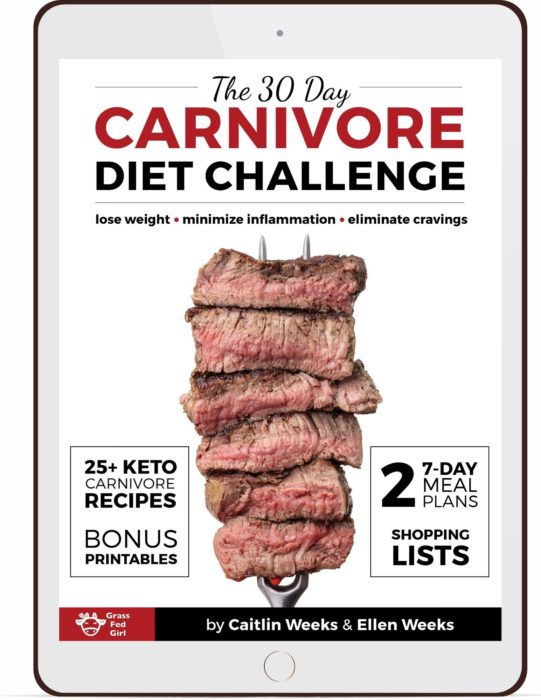
Transform your health, boost your energy, and achieve your goals with the 30-Day Carnivore Diet Challenge. Download your copy now and start your journey to a healthier you today!


